Vocabulary: Medical Terms You'll See in This Article
Adsorption
The process where a substance sticks to the surface of another substance (like iron filings clinging to a magnet). This differs from absorption, where something soaks completely into something else (like a sponge soaking up water).
Toxin
A poison or harmful chemical that can damage your body or organs.
Bioavailability
How much of a drug or poison actually gets absorbed into your bloodstream and becomes active in your body.
Aspiration
When a substance accidentally enters the lungs instead of the stomach. This is dangerous and can cause serious complications.
Contraindication
A medical reason why a particular treatment should NOT be used because it could cause harm.
What Is Activated Charcoal?
The Science Behind It
Activated charcoal is not ordinary charcoal from a grill. It is charcoal processed at extremely high temperatures using steam or chemicals, creating millions of tiny pores throughout its structure. One gram of activated charcoal (smaller than a grain of rice) has a surface area of approximately 500 to 1,500 square metres. That is larger than three tennis courts packed into something fingernail-sized.
This enormous surface area is what makes activated charcoal medically useful. Toxic molecules stick to this surface through a process called adsorption, preventing them from entering your bloodstream.
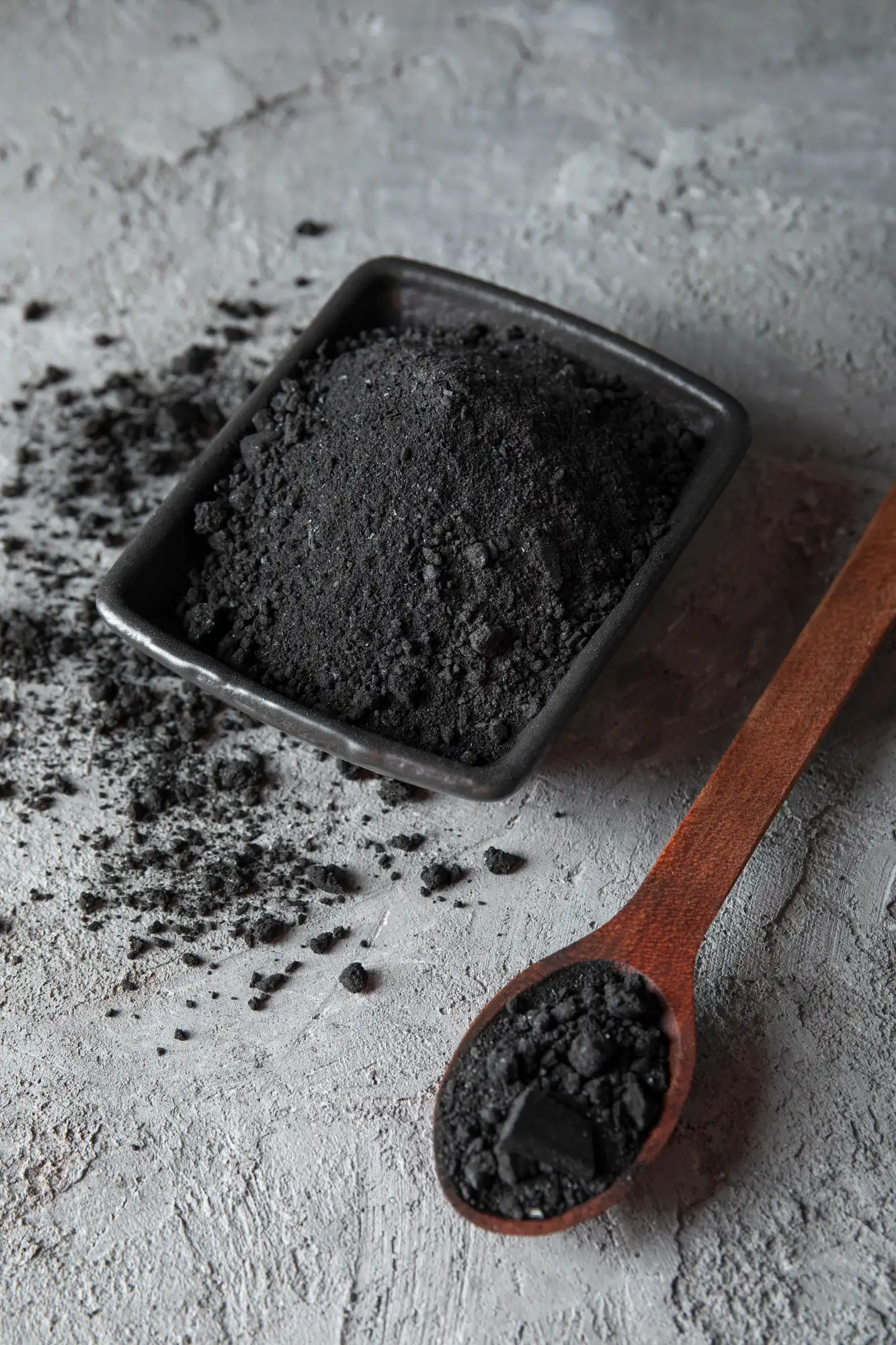 Source: Designed by freepik (www.freepik.com)
How It Works: Adsorption, Not Absorption
Adsorption and absorption are different. When activated charcoal adsorbs a poison, the toxic molecule sticks to its surface without becoming part of the charcoal itself. The poison then passes through your digestive system and leaves your body in your stool, never reaching your bloodstream.
When Activated Charcoal Works: Emergency Poisoning Treatment
The Primary Medical Use
Activated charcoal's most important use is treating poisoning and drug overdose in emergency settings. It is given as a black, unpleasant drink as quickly as possible after someone swallows a toxic substance. Meta-analysis of randomized controlled trials involving 5,059 patients showed statistically significant efficacy and safety outcomes when activated charcoal is used appropriately.
Timing Is Critical
Activated charcoal is most effective when given within one hour of ingestion. Within this window, it can reduce the absorption of many toxins by up to 74 percent. Even when given 4 hours after ingestion, it can still reduce absorption by approximately one-third.
Effectiveness decreases with time because the poison is continuously being absorbed into the bloodstream.
What Activated Charcoal Works Against
Activated charcoal is effective for poisonings from many medications (paracetamol, aspirin, antidepressants, anticonvulsants), some pesticides, and certain plant toxins. In emergencies, always contact poison control who will determine if charcoal is appropriate for the specific substance involved.
When Activated Charcoal Does NOT Work
Critical: Substances That Contraindicate Charcoal
Activated charcoal is ineffective and potentially dangerous for several substances. This is why professional medical guidance is essential.
What Does NOT Respond to Charcoal
Alcohol (both ethanol and methanol) is not adsorbed by charcoal. Metals like iron and lithium cannot be bound by charcoal. Caustic substances (strong acids, alkalis, bleach) are dangerous because charcoal does not help and the risk of vomiting causes further damage. Petroleum products (petrol, kerosene) are problematic because if the person vomits, these substances can enter the lungs (aspiration). Cyanide acts too rapidly for charcoal to be effective.
Always Call Poison Control First
Never give activated charcoal at home based on guessing. Call your poison control centre or emergency services immediately. They will determine whether charcoal is appropriate, what dose is needed, and guide your treatment. Acting without professional guidance wastes critical time or causes harm.
Other Legitimate Medical Uses
Kidney Disease Support
In chronic kidney disease, the kidneys cannot remove certain waste products effectively. Research suggests activated charcoal can adsorb urea and nitrogenous waste in the gut before absorption, reducing the burden on failing kidneys. This is supportive therapy, not a cure.
Intestinal Gas and Bloating
Some evidence suggests activated charcoal can reduce intestinal gas by adsorbing gas-producing substances. The effect is modest and does not work equally for everyone. It is considered safe for occasional use but should not be used long-term without medical supervision.
The Detox Myth: What Activated Charcoal Cannot Do
Why "Detox" Products Are Marketing Fiction
Activated charcoal has been aggressively marketed in "detox" juices, cleanses, and beauty products. Science does not support these claims.
Detox Drinks Have No Evidence
There is no scientific evidence that activated charcoal in juice removes toxins from a healthy person's body. Your liver and kidneys already detoxify continuously and efficiently. A healthy person does not accumulate toxins needing removal through charcoal drinks. These products are marketing, not medicine.
Charcoal Toothpaste: Risk Without Benefit
Activated charcoal may remove some surface stains (as would any mildly abrasive substance), but it can damage tooth enamel with regular use. The American Dental Association does not endorse it. Use evidence-based whitening products instead.
Face Masks, Hangovers, and Other Claims
Face masks containing activated charcoal may remove surface impurities but offer only cosmetic benefit. Activated charcoal is completely ineffective for hangovers because alcohol is not adsorbed by charcoal. Claims about "drawing out toxins" from skin are not scientifically supported.
Important Safety Information
The Two-Hour Medication Rule
Never take activated charcoal within two hours before or after taking any medication. Charcoal will adsorb your medicine and prevent it from working. This includes birth control pills, which may fail if taken with charcoal.
Aspiration Risk and Constipation
Never give activated charcoal to someone who is unconscious or very drowsy because they cannot protect their airway. Constipation is a common side effect, so ensure adequate water intake. Black or very dark stools are expected and harmless.
Long-Term Use Is Not Recommended
Do not use activated charcoal regularly without medical supervision. Prolonged use can interfere with nutrient and medication absorption.
Should You Keep It at Home?
When Home Storage Makes Sense
If you have young children, activated charcoal is worth keeping in your first aid kit (children are the most common victims of accidental poisoning). However, keep it alongside the poison control centre phone number and a list of what it works against.
Standard dosing is 50 to 100 grams for adults and approximately 1 gram per kilogram of body weight for children, but always call poison control first.
Activated charcoal is a genuine lifesaver in the right situation and completely useless in the wrong one. The difference is knowledge and professional guidance. When in doubt, call poison control first. That phone call is more valuable than any first aid item.