Many people use skin creams every day hoping for a brighter, more even complexion. The results can look good at first. Dark spots fade, the skin looks smoother, and confidence improves. But what often goes unnoticed is the ingredient behind these changes and the effects it may have with long-term use.
One of the most common ingredients in skin-lightening products is hydroquinone. It is effective, but it is not harmless when used incorrectly or for too long. Understanding it can help you make safer choices for your skin.
What Is Hydroquinone?
Hydroquinone is a chemical used in skincare to reduce dark spots and lighten areas of the skin.
It works by blocking an enzyme called tyrosinase, which is needed to produce melanin. Melanin is the pigment that gives your skin its color. When melanin production is reduced, the skin appears lighter.
Because of this effect, hydroquinone is commonly used to treat conditions like hyperpigmentation, melasma, acne scars, and uneven skin tone.
It is important to know that hydroquinone does not improve skin health. It only reduces pigment.
Akosua uses a cream to fade dark marks left by acne. After a few weeks, the spots become lighter. The change looks positive, but she does not realise the active ingredient is hydroquinone.
Other Names for Hydroquinone
Hydroquinone is not always listed clearly on product labels. Manufacturers may use different names or chemical terms.
Some names to watch for include:
- Hydroquinone
- 1,4-dihydroxybenzene
- Quinol
- Hydroxyphenol
- p-dihydroxybenzene
In some cases, it may be hidden in combination products or not clearly stated at all, especially in unregulated or imported creams.
Kwame buys a skin cream from a market. The label does not clearly say hydroquinone, but lists “quinol” in small print. Without knowing, he uses a product containing the same active chemical.
How to Spot It in Products
Always read the ingredient list before using any skin product.
Look carefully at the full list, not just the front label. Words like “brightening,” “whitening,” or “toning” often signal the presence of strong lightening agents.
If the product does not have a clear ingredient list, that is a warning sign. Avoid using such products on your skin.
When in doubt, ask a pharmacist or healthcare professional before using the product.
Efua checks the back of a cream before buying it. She notices unfamiliar chemical names and decides to ask a pharmacist. She later learns the product contains hydroquinone and chooses a safer option.
Effects of Hydroquinone on the Skin
Short-Term Effects
When used correctly and for a limited time under medical guidance, hydroquinone can reduce dark spots and even out skin tone.
This is why it is sometimes prescribed by doctors for specific skin conditions.
A dermatologist prescribes hydroquinone for a patient with melasma. The patient uses it for a few months as directed and sees improvement without complications.
Long-Term and Uncontrolled Use
Problems begin when hydroquinone is used for long periods, in high concentrations, or without supervision.
Possible effects include:
- Skin thinning, making the skin more fragile
- Increased sensitivity to sunlight
- Uneven skin tone or patchy discoloration
- Delayed wound healing
One of the most serious conditions is ochronosis. This causes dark, thickened patches on the skin that can be difficult or impossible to reverse.
In some cases, the skin becomes dependent on the product. When use stops, the dark spots may return or worsen.
After using a lightening cream for years, Adjoa notices dark patches appearing on her cheeks. Instead of improving, her skin becomes uneven and harder to manage.
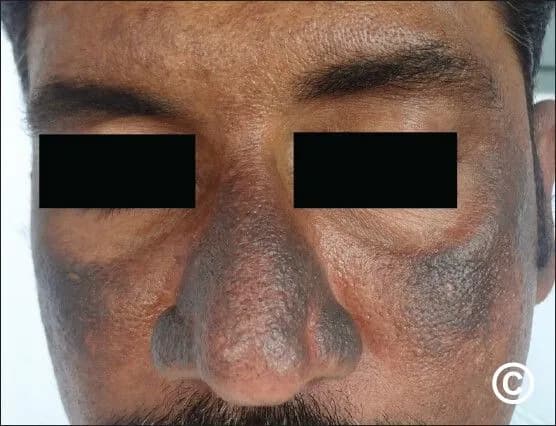 An image of ochronosis
Why Many People Misuse It
Hydroquinone is often used without proper knowledge.
Many people focus on quick results without understanding long-term effects. Some products are sold without clear instructions, and others are mixed with harmful substances like steroids.
Social pressure and beauty standards can also push people to keep using these products for longer than recommended.
A young woman continues using a cream because it makes her skin look lighter. Over time, she increases the amount and frequency, not realising the risk she is creating.
Safer Alternatives for Healthy Skin
You can improve your skin tone and reduce dark spots without using harsh chemicals.
Consider these safer options:
- Vitamin C: Helps brighten skin and reduce pigmentation
- Niacinamide: Improves skin tone and reduces inflammation
- Azelaic acid: Useful for acne and pigmentation
- Alpha arbutin: A gentler alternative that also reduces melanin production
- Sunscreen: One of the most important steps; prevents dark spots from getting worse
Natural habits also matter. Eat a balanced diet, stay hydrated, and protect your skin from excessive sun exposure.
Kojo switches from a strong lightening cream to a routine that includes sunscreen and vitamin C. Over time, his skin becomes more even without the side effects he experienced before.
When Hydroquinone May Be Appropriate
Hydroquinone is not completely unsafe. It has a place in medicine when used correctly.
Doctors may prescribe it for specific conditions and for limited periods, usually a few months. It should always be used under professional supervision.
Self-medication and long-term use are the main causes of harm.
A patient with stubborn pigmentation is treated with hydroquinone under a doctor’s care. The treatment is stopped after a set period, and maintenance continues with safer products.
Conclusion
Hydroquinone can give fast results, but it comes with risks when used without proper guidance.
Healthy skin is not just about looking lighter or smoother. It is about maintaining balance, strength, and long-term care.
Before using any product, take time to understand what is inside it. Making informed choices today can protect your skin for years to come.