Every two seconds, someone in the world has a stroke. Many of them survive but are left unable to speak, move, or care for themselves. Some do not survive at all. The frightening truth is that most people around them had no idea what was happening until it was too late. This article changes that.
What Is a Stroke?
A stroke happens when the blood supply to part of the brain is suddenly cut off. The brain depends on a constant flow of oxygen-rich blood to function. When that flow is interrupted, brain cells begin to die within minutes. The longer the brain goes without blood, the more damage is done. This is why stroke is a medical emergency that demands immediate action.
The phrase doctors often use is: "Time is brain." Every minute counts.
Imagine a water pipe feeding your house. If the pipe gets blocked or bursts, the water stops flowing. Your taps run dry and things stop working. A stroke is exactly that, except the pipe is an artery feeding your brain, and the consequences are far more serious than a dry tap.
The Two Main Types of Stroke
Ischemic Stroke
This is the most common type, accounting for about 87% of all strokes worldwide. It happens when a blood clot blocks an artery that supplies blood to the brain. The clot can form inside the artery (due to plaque build-up from conditions like high blood pressure or diabetes) or travel from another part of the body, such as the heart. Without blood flow, the affected area of the brain begins to die.
Kofi, a 58-year-old teacher in Kumasi with uncontrolled high blood pressure, wakes one morning unable to lift his right arm. His speech is garbled. His wife thinks he is still half-asleep. But Kofi is having an ischemic stroke. A clot has blocked blood flow to the left side of his brain. Every minute they wait before getting him to hospital means more brain tissue lost.
Hemorrhagic Stroke
This type is less common but often more deadly. It happens when a blood vessel in the brain bursts and bleeds into the surrounding brain tissue. The bleeding puts pressure on the brain and damages it. High blood pressure is the number one cause. It can also result from an aneurysm, which is a weak, balloon-like bulge in a blood vessel that suddenly ruptures.
Abena, 62, collapses at her shop after complaining of the "worst headache of her life." She loses consciousness before anyone can help her. This sudden, severe headache followed by collapse is a classic sign of hemorrhagic stroke. Her family had been urging her to see a doctor about her blood pressure for years, but she kept putting it off.
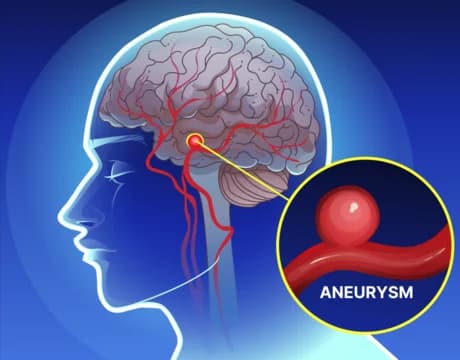
Transient Ischemic Attack (TIA): The Warning Stroke
A Transient Ischemic Attack (TIA) is sometimes called a "mini stroke." It causes the same symptoms as a full stroke but lasts only a few minutes to a few hours, then clears on its own. It happens when blood flow is briefly interrupted without causing permanent damage. Do not ignore a TIA. It is a serious warning sign that a major stroke could follow, often within days.
Kwame, 55, suddenly cannot find his words during a phone call. His speech becomes slurred for about 10 minutes, then clears. He tells his family he is fine and goes back to watching television. Three days later, he has a full stroke. A TIA should always be treated as an emergency. Going to the hospital immediately could have prevented what happened to Kwame.
Who Is at Risk?
Anyone can have a stroke, but certain conditions raise your risk significantly. The most important risk factors are:
High blood pressure (Hypertension): The leading cause of stroke in Ghana and worldwide. Nearly 70% of all strokes are linked to high blood pressure. Many people with high blood pressure feel completely fine, which is why it is called the "silent killer."
Diabetes: High blood sugar damages blood vessels over time, making clots and artery disease more likely.
Heart disease and irregular heart rhythms: A condition called atrial fibrillation (AF) causes the heart to beat irregularly, which can lead to clots that travel to the brain.
High cholesterol: Builds up fatty deposits in arteries, narrowing them and increasing clot risk.
Obesity: Excess weight raises blood pressure, blood sugar, and cholesterol, all at once.
Smoking: Damages blood vessels and thickens blood, making clots more likely.
Excessive alcohol intake: Raises blood pressure and contributes to irregular heart rhythms.
Family history and age: Risk increases significantly after age 35 and is much higher after 60. However, stroke can and does happen in young people too.
Stress and physical inactivity: Both contribute to high blood pressure and poor vascular health.
In Ghana, the combination of uncontrolled hypertension, high salt diets, physical inactivity, and limited access to routine blood pressure screening creates a perfect environment for stroke. Many Ghanaians do not know their blood pressure is dangerously high until they have already had a stroke or are admitted to hospital for another reason.
How to Spot a Stroke Immediately: The BEFAST Method
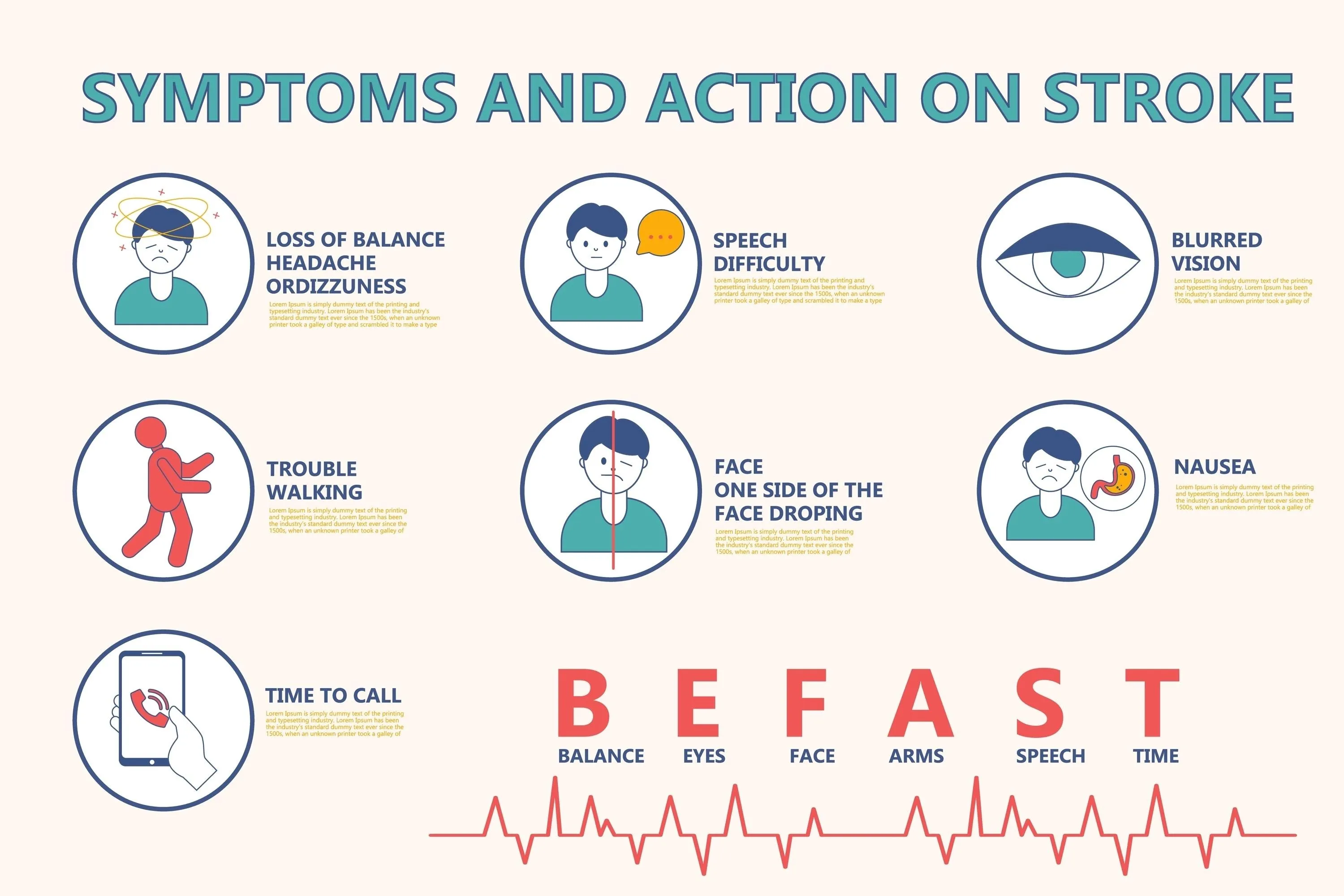
The BEFAST method is the fastest and most reliable way to identify a stroke. Each letter stands for a key warning sign. If you notice any one of these in yourself or someone around you, call for emergency help immediately and get to the nearest hospital.
B: Balance. A sudden loss of balance or coordination, stumbling, or difficulty walking without a clear reason.
E: Eyes. Sudden blurred vision, double vision, or loss of vision in one or both eyes.
F: Face. Ask the person to smile. Does one side of their face droop or appear uneven? Facial drooping is a classic sign.
A: Arms. Ask the person to raise both arms. Does one arm drift downward or feel weak? Arm weakness on one side is a major warning.
S: Speech. Is their speech slurred, strange, or confused? Can they repeat a simple sentence like "The sky is blue"? Difficulty speaking or understanding speech is a red flag.
T: Time. Time to call for help. Time to get to hospital. Do not wait to see if symptoms improve. Do not drive yourself. Act NOW.
Ama, 49, is having lunch with her husband when he suddenly stares blankly and drops his spoon. She notices his mouth is drooping on the left side. She remembers BEFAST. She asks him to raise both arms: his left stays up but his right drifts down. She asks him to say his name: his words are slurred and jumbled. Without hesitation, she gets him into the car and drives straight to Korle-Bu Teaching Hospital. Because she acted within 30 minutes, the medical team is able to give him treatment that dramatically reduces the damage. Her knowledge of BEFAST saved her husband's brain.
The Stroke Situation in Ghana and the World
Stroke is not a disease of distant countries or wealthy populations. It is a growing crisis right here in Ghana and across sub-Saharan Africa.
In Ghana: Reported stroke cases in the country more than doubled in just six years, rising from 10,732 cases in 2016 to 23,009 cases in 2021. A comprehensive review of national data puts Ghana's stroke prevalence at nearly 8% and its incidence rate at about 1.2%, placing a major burden on our health system. Stroke is among the top three causes of death in Ghana, with case fatality rates as high as 41% to 43% within one month of the stroke event. People aged 35 to 59 are five times more likely to have a stroke than younger adults, and those above 60 are six times more likely. Disturbingly, these numbers are rising across all age groups, including younger Ghanaians.
Hypertension is the dominant driver of this epidemic. Studies show that only a small fraction of Ghanaians with high blood pressure have it adequately controlled, and community awareness of stroke warning signs remains dangerously low.
Globally: Stroke is the second leading cause of death worldwide, claiming about 7 million lives every year. There are nearly 12 million new strokes every year globally, and over 100 million people alive today have survived a stroke. One in four adults over the age of 25 will have a stroke in their lifetime. The vast majority, 87% of stroke deaths and 89% of stroke-related disability, occur in low- and middle-income countries like Ghana.
In a community survey conducted in Accra, only 40% of residents could correctly identify the brain as the organ affected in stroke. This means that when a neighbour collapses with a drooping face and garbled speech, the majority of bystanders may not know what they are looking at or what to do. Raising public awareness is not optional; it is an urgent public health necessity.
What to Do When You Suspect a Stroke
Act on these steps immediately, without hesitation:
-
Call for help right away. Contact your nearest emergency service or ask someone around you to help transport the person to the nearest hospital urgently.
-
Note the time. Record exactly when symptoms first appeared. Doctors need this information to decide on treatment, especially for the clot-dissolving medication known as tPA (tissue Plasminogen Activator), which is most effective within 4.5 hours of symptom onset.
-
Keep the person calm and safe. Help them sit or lie down in a comfortable position. Do not give them anything to eat or drink. Stroke affects swallowing and they could choke.
-
Do not leave them alone. Stay with them and keep reassuring them until help arrives.
-
Do not wait for symptoms to pass. Even if they seem to be improving, they must still see a doctor urgently. A TIA can precede a major stroke within hours or days.
-
Do not give aspirin unless instructed by a medical professional. Aspirin is helpful for ischemic stroke but can be dangerous in hemorrhagic stroke. You cannot tell the difference without a brain scan.
-
Get to a hospital with CT scan capability. The type of stroke must be confirmed before treatment begins.
Yaw, 67, is visiting family in Accra when he suddenly cannot stand and his speech becomes confused. His grandson, a secondary school student who had learned about BEFAST in health class, immediately shouts for his parents. They note the time: 2:45 PM. They do not wait for a family discussion or call a prayer group first. They drive directly to a hospital. Yaw receives a brain scan, is diagnosed with ischemic stroke, and receives treatment within three hours. He walks out of the hospital one week later. His recovery was possible because his family acted fast and smart.
Stroke Medications: What You Should Know
If you or a loved one has been prescribed medication after a stroke or TIA, taking it correctly is not optional; it is life-saving.
Common medications after stroke include:
Antiplatelets (e.g., Aspirin, Clopidogrel): These prevent blood platelets from sticking together and forming clots. They are given after ischemic stroke to reduce the risk of a repeat stroke. Do not stop taking them without your doctor's advice, even if you feel well.
Anticoagulants (e.g., Warfarin): Used for people with atrial fibrillation or those at high risk of clot formation. Warfarin requires regular blood tests (INR monitoring) to ensure the dose is correct. Missing tests can be dangerous.
Antihypertensives (e.g., Amlodipine, Lisinopril, Hydrochlorothiazide): Controlling blood pressure is the single most effective way to prevent stroke. These medications must be taken every day, even when blood pressure readings seem normal. Stopping them abruptly can cause a dangerous rebound spike.
Statins (e.g., Atorvastatin, Simvastatin): Reduce cholesterol and stabilise plaques in artery walls, lowering the risk of another stroke. They are taken long-term.
Key message: Stroke medications work only if you take them consistently, at the right dose, at the right time. Missing doses, sharing medications, or stopping treatment because you "feel better" can lead to a second stroke, which is often more severe than the first.
Madam Dede was discharged from hospital after an ischemic stroke with a prescription for aspirin and amlodipine. She took her medications faithfully for two months. Then she stopped the amlodipine because it made her ankles swell slightly. Six weeks later, her blood pressure shot back up and she had a second, far more severe stroke. The ankle swelling was manageable; the second stroke was devastating. Always speak to your doctor before stopping or changing any medication.
Debunking Common Stroke Myths
Myth 1: "Stroke only happens to old people."
False. While the risk of stroke increases with age, people in their 30s, 40s, and even younger can have strokes. Research from Ghana shows the incidence is rising across all age groups, with a trend toward earlier onset. Young adults with uncontrolled hypertension, diabetes, obesity, or who smoke are at real risk.
A 38-year-old banker in Accra with poorly controlled hypertension and high stress levels is just as likely to have a stroke as a 70-year-old with the same profile. Age is a risk factor, not a requirement.
Myth 2: "If the symptoms go away, the person is fine."
False. Symptoms that disappear may indicate a TIA, which is a serious warning that a major stroke is coming. Anyone who experiences stroke-like symptoms that resolve on their own must still go to hospital immediately for evaluation. Waiting to see if it happens again is gambling with someone's brain.
Myth 3: "Stroke is God's will and cannot be prevented."
False. Up to 80% of strokes are preventable through lifestyle changes and medical management of risk factors. Controlling your blood pressure, managing diabetes, quitting smoking, reducing alcohol, eating well, exercising regularly, and attending your routine health check-ups are all concrete actions that significantly reduce stroke risk. Prevention is not just possible; it is achievable.
Myth 4: "Nothing can be done once a stroke starts."
False. There are effective treatments for ischemic stroke, including a clot-dissolving drug (tPA) and a procedure called thrombectomy that physically removes the clot. Both are time-sensitive and must be administered in a hospital. This is exactly why getting to hospital quickly matters so much. The faster you act, the better the chance of recovery.
Myth 5: "Stroke patients cannot recover."
False. Recovery from stroke is possible, and many people regain significant function with proper medical care and rehabilitation. The brain has a remarkable ability to rewire itself, a process called neuroplasticity. Speech therapy, physiotherapy, and occupational therapy all play important roles. Recovery depends on the severity of the stroke, how quickly treatment was received, and the support available to the patient. Early action gives the best chance.
Prevention: Protecting Your Brain Every Day
Stroke prevention is not complicated. These are the most important steps you can take right now:
-
Know your blood pressure. Check it regularly. If it is high, see a doctor and take your medications every day without fail.
-
Know your blood sugar. If you have diabetes or are at risk, manage it actively with your doctor.
-
Eat less salt and more vegetables. High salt raises blood pressure. A diet rich in fruits, vegetables, and whole grains protects your arteries.
-
Move your body. At least 30 minutes of moderate exercise, like brisk walking, five days a week reduces stroke risk significantly.
-
Quit smoking. There is no safe amount of smoking for your brain or arteries.
-
Limit alcohol. Excessive drinking raises blood pressure and damages the heart.
-
Manage stress. Chronic stress contributes to hypertension. Rest, social connection, and mental well-being matter.
-
Attend health screenings. Many people do not know they have high blood pressure, diabetes, or high cholesterol until it is too late. Regular check-ups save lives.
-
Share what you know. Tell your family about BEFAST. Talk to your community. Awareness saves lives.
Stroke is one of the most devastating medical emergencies a person or family can face. But it is not inevitable, and it is not untreatable. With the right knowledge, you can protect yourself, spot the signs in someone else, and act fast enough to make a real difference.
Ghana's stroke burden is rising. Our communities deserve to be equipped. Share this article. Teach your family the BEFAST signs. Check your blood pressure this week. The brain you save may be your own.